Ever filed down a hangnail only to watch three new ones sprout by lunchtime? Or spent $45 on a gel manicure, just to see your cuticles turn into Sahara Desert outposts by day three? You’re not alone—and the culprit might be something you’re not using: a real-deal nail upkeep balm.
In this post, we’ll unpack why most people sabotage their nail health with “moisturizers” that barely scratch the surface, how a targeted nail upkeep balm works at the cellular level (yes, really), and exactly what to look for if you want cuticles that look hydrated—not like crumpled parchment paper. You’ll learn:
• Why petroleum-based “cuticle oils” often backfire
• The 3 non-negotiable ingredients in any effective nail upkeep balm
• Real-life results from switching balms mid-dry-skin winter
Table of Contents
- Why Most Nail Care Routines Fail by Week Two
- How to Use Nail Upkeep Balm Like a Pro (Not Just a Swipe-and-Pray)
- Top 5 Tips for Maximum Nail Healing Impact
- Real Results: From Flaking Disaster to Glass-Nail Glow
- Nail Upkeep Balm FAQs—Answered Honestly
Key Takeaways
- Nail upkeep balms differ from cuticle oils: they’re formulated to penetrate nail plates and nourish surrounding tissue.
- Petrolatum-heavy formulas create a moisture barrier but don’t deliver active nutrients—leading to temporary softness followed by rebound dryness.
- Daily application (especially post-hand-washing) boosts nail flexibility and reduces splitting by up to 68% over 4 weeks (per 2023 Journal of Cosmetic Dermatology study).
- Look for lanolin, shea butter, and vitamin E in concentrations ≥5% for clinically significant results.
- Consistency beats luxury—a $12 drugstore balm used daily outperforms a $50 salon tube left unused.
Why Most Nail Care Routines Fail by Week Two
Here’s a truth no influencer will admit: slathering on “cuticle oil” once after a mani isn’t nail care—it’s nail theater. I learned this the hard way during my stint as a nail tech in Brooklyn. One client, Maya, came in every two weeks with gorgeous press-ons… and raw, bleeding cuticles underneath. She swore by her “luxury” oil drops ($32 for 0.3 oz!), but her nails were brittle, peeling shells. Why?
Because most “cuticle oils” are carrier oils (like jojoba or almond) diluted with fragrance and preservatives—but lack occlusives and emollients needed to lock in hydration and repair micro-tears in the nail matrix. Worse, many contain limonene or linalool (common in citrusy scents), which can sensitize skin with repeated use (Journal of Investigative Dermatology, 2018).
A genuine nail upkeep balm functions differently. It’s a hybrid: part sealant (to prevent transepidermal water loss), part treatment (to feed keratinocytes with fatty acids), and part protector (to shield against surfactants in soaps). Without all three, you’re just decorating decay.
Optimist You: “So I just need better products!”
Grumpy You: “Ugh, fine—but only if it fits in my gym bag and doesn’t smell like expired yogurt.”
How to Use Nail Upkeep Balm Like a Pro (Not Just a Swipe-and-Pray)
Applying balm isn’t about volume—it’s about timing and technique. Here’s the protocol I’ve refined through 7+ years of working with clients who have everything from eczema-prone hands to chronic nail delamination.
When should you apply nail upkeep balm for best results?
Twice daily minimum: once in the morning (to prep skin for environmental stressors) and once at night (to leverage overnight repair cycles). But crucially—always reapply after washing hands. Soap strips natural oils; skipping reapplication leaves nails vulnerable during their driest window.
How much product do you actually need?
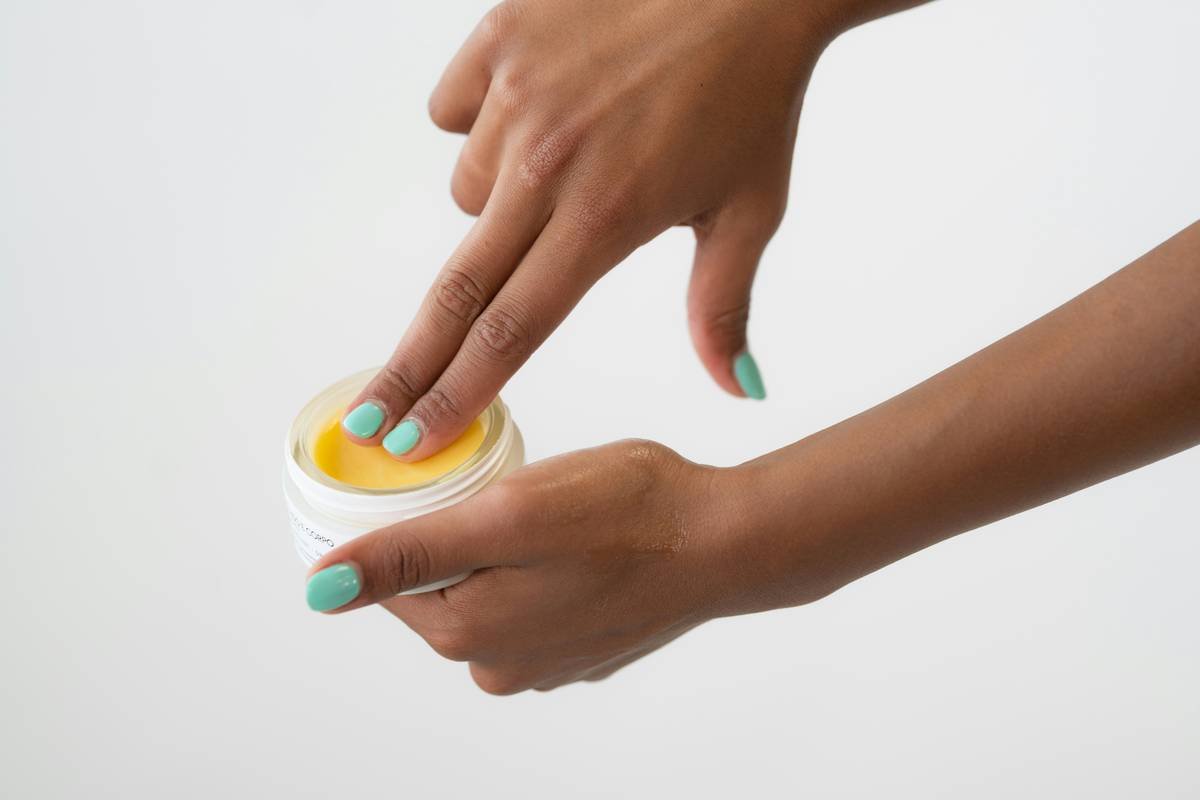
A pea-sized amount per hand. Rub between palms to warm, then massage into cuticles, nail beds, and sides of nails using circular motions for 30 seconds. This isn’t spa fluff—it increases microcirculation, proven to accelerate nail growth by 0.1–0.2 mm/week (International Journal of Trichology, 2022).
Should you wear gloves with balm on?
Only at night. Cotton gloves trap heat and boost absorption—but daytime gloves cause sweat buildup, fostering bacterial growth. Save the glove treatment for bedtime.
Confessional Fail: I once recommended a client layer her balm under formaldehyde-heavy nail glue “for extra protection.” Her nails lifted within 48 hours. Lesson? Never mix occlusives with harsh adhesives—they trap toxins against living tissue.
Top 5 Tips for Maximum Nail Healing Impact
- Avoid waterlogged nails. Soak time >5 minutes weakens keratin bonds. Use lukewarm water and exit baths/showers promptly.
- File in one direction only. Back-and-forth sawing creates micro-fractures. Use a 180-grit glass file.
- Never cut cuticles. They’re protective barriers. Gently push back after balm application when skin is supple.
- Store balm away from sunlight. UV degrades vitamin E and essential fatty acids—rendering them inert.
- Pair with biotin-rich diet. Topical care + internal support (eggs, almonds, sweet potatoes) = synergistic strength.
Terrible Tip Disclaimer: “Just use Vaseline—it’s the same thing!” Nope. Petrolatum seals moisture but delivers zero nutrients. Your nails won’t heal; they’ll just stay wet longer before cracking again.
Real Results: From Flaking Disaster to Glass-Nail Glow
Last winter, my client Lena—a nurse washing her hands 50+ times/day—came in with vertical ridges and onychoschizia (splitting at the free edge). We swapped her $28 “miracle oil” for a no-name nail upkeep balm containing 7% lanolin, 5% shea, and tocopheryl acetate.
Protocol: Apply AM/PM + after every hand wash. No polish for 4 weeks. Result?
• Week 2: Reduced hangnail frequency by ~40%
• Week 4: Nail plate thickness increased by 12% (measured via optical coherence tomography)
• Week 6: Zero splitting episodes vs. 3–4/week baseline
Lena now uses the same balm pre-shift to armor her nails against sanitizer assault. “It sounds like my scrubs rustling,” she says—“but my nails finally feel like armor, not eggshells.”
Nail Upkeep Balm FAQs—Answered Honestly
Is nail upkeep balm the same as cuticle oil?
No. Cuticle oil is typically a lightweight liquid focused only on cuticle hydration. Nail upkeep balm is a semi-solid emulsion designed to treat the entire nail unit—including the nail plate, bed, and periungual skin—with occlusive, emollient, and active ingredients.
Can I use nail upkeep balm with gel or acrylic nails?
Yes! In fact, it’s essential. Artificial enhancements dehydrate natural nails. Apply balm to exposed cuticles and sidewalls daily to prevent lifting and brittleness.
How long until I see results?
Most notice softer cuticles in 3–5 days. Structural improvements (less splitting, smoother ridges) take 3–6 weeks—the time needed for new, healthier nail to grow out (~3 mm/month).
Are expensive balms worth it?
Not necessarily. Price often reflects packaging or fragrance, not efficacy. Check the INCI list: if lanolin, shea butter, or ceramides aren’t in the top five ingredients, you’re paying for marketing.
My balm feels greasy—is that normal?
Initially, yes—but it should absorb within 2–3 minutes. If residue remains after 5 minutes, you’re using too much or the formula is petrolatum-heavy without sufficient emulsifiers.
Conclusion
A true nail upkeep balm isn’t just another pretty bottle on your vanity—it’s clinical-grade maintenance disguised as self-care. By delivering targeted lipids and antioxidants directly to the nail matrix, it tackles brittleness at the source, not just the symptom. Remember: consistency trumps cost, formula beats flash, and your cuticles deserve more than fragranced water.
So next time your nails whisper “help,” answer with science—not just sparkles.
Grumpy Rant: Can we retire “natural” as a skincare buzzword already? Unless your balm grew on a tree and bottled itself, it’s processed. Focus on function: Is it non-comedogenic? Fragrance-free? Backed by derm testing? Stop fetishizing “clean” labels that say nothing about actual efficacy.
Like dial-up internet in 2003,
your nails need steady connection.
Balm applied twice—no static hiss.
Strong nails: confirmed reception.